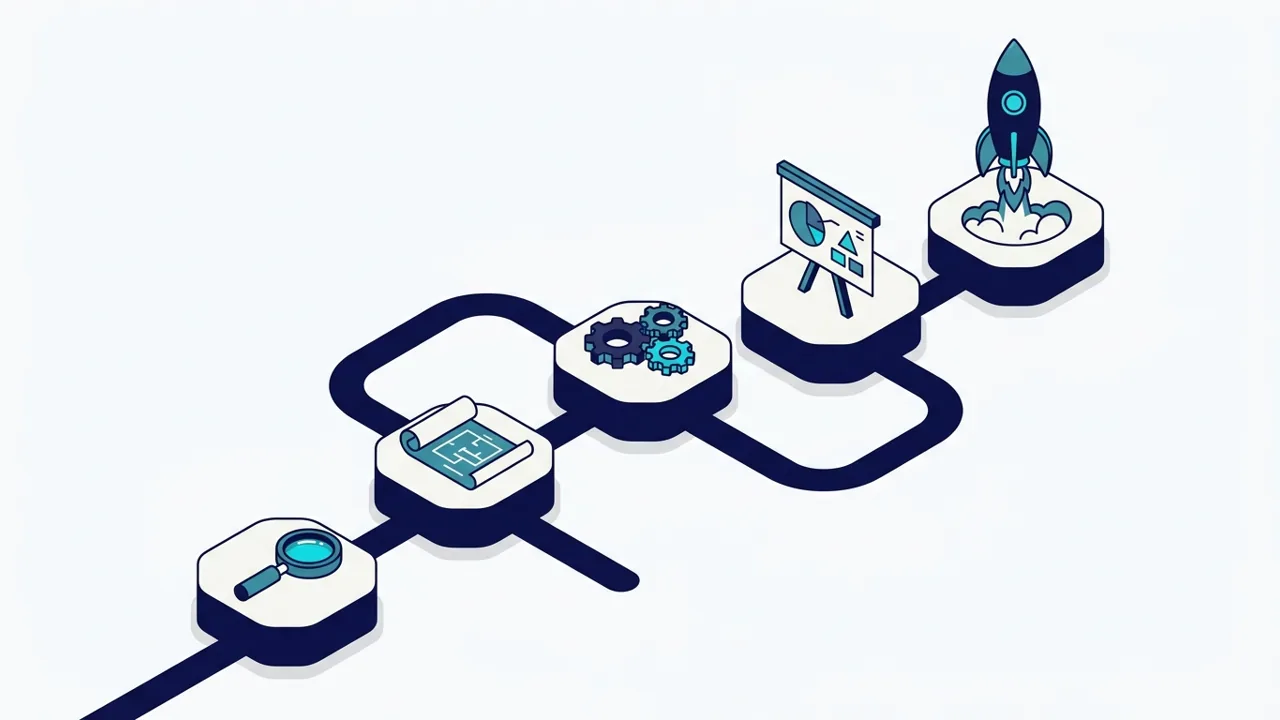
For teams replacing a basic tool or starting fresh, the fast-track puts a fixed scope live in six weeks: incident and request management, the catalogue and portal, SLAs and escalations, knowledge and reporting. The scope is locked in week 1, with acceptance criteria, so it does not grow along the way. Problem and change management, a deeper CMDB and further integrations follow once the foundation is stable. If you need them from day one, or you run several service desks, choose the full implementation.
| Week | What is delivered |
|---|
| Week 1 | Framework, MVP scope and KPIs agreed with the sponsor; acceptance criteria written |
| Week 2 | Incident and request workflows, categories and the first service catalogue; routing and agent templates |
| Week 3 | Self-service portal and priority knowledge articles; SLA rules and automatic escalations |
| Week 4 | Dashboards and operational reports; essential integrations (directory, email, CMDB basics) |
| Week 5 | Test plan run, agent and user training, controlled go-live |
| Week 6 | Stabilisation, first indicators reviewed, next improvements chosen from real use |
What you prepare: a sponsor who can decide, an ITSM contact available one to two days a week, your current SLA and escalation rules, and the list of integrations the first release needs. Ticket history is not part of the fast-track: we start with clean data and keep the history accessible separately, or migrate it later (see migration to HaloITSM).