













Book A Meeting
SMC Consulting
HaloITSM self-service portal

An IT self-service portal in HaloITSM, set up by ITIL v4 consultants

An IT self-service portal works when people find the answer or the right form faster than they can write an email. SMC Consulting's ITIL v4 certified consultants set up the HaloITSM portal around your most frequent requests: a clear catalogue, short guided forms, knowledge suggested before a ticket is logged, single sign-on and Microsoft Teams, then measure how much it is used.

180ITSM implementations
40+ITSM migrations
20years in IT service management
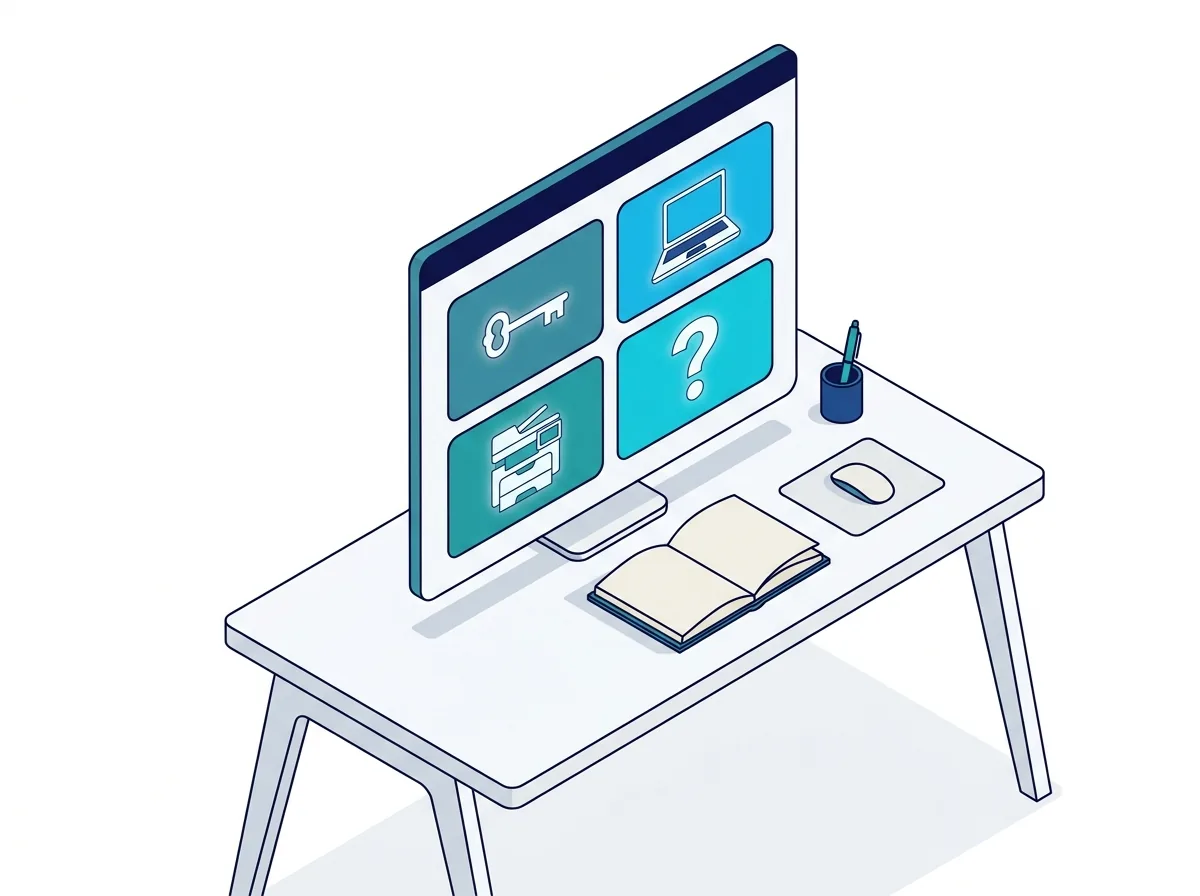
Illustration of an IT self-service portal in HaloITSM with request tiles and a knowledge base
SMC Consulting

They trust us on their ITSM projects

  • Proximus
  • Lineas
  • Brussels Airport
  • ING
  • CPH Banque
  • DKV
  • Loterie Nationale
  • Crelan
  • Belfius
  • ALD Automotive
  • BNP Paribas Fortis
  • AXA
  • KBC

What a good IT self-service portal does

An IT self-service portal is the front door of the service desk: users request services, report incidents, follow their tickets and find answers without calling or emailing IT. A good one does four things:

  • A service catalogue in the users' words, with the most frequent requests on the first screen
  • Guided forms that ask only what the fulfilment team needs, with approvals routed behind the scenes
  • Status tracking, so users see where their ticket stands without chasing anyone
  • Knowledge suggestions while the user types, so simple questions are answered before a ticket exists: that is ticket deflection

The portal is where service request management and incident management meet your users. Both practices are covered in our practical guide to ITSM, and HaloITSM is the tool we recommend most often.

Web portal and chat app windows both connected to one knowledge base, with a lightbulb above

The HaloITSM portal: what users get

A catalogue and guided forms

Catalogue requests with forms, approvals and tasks behind them, from access rights to new laptops and onboarding.

My tickets

Open and closed tickets in one list, with updates, comments and the option to close a simple case themselves.

Your branding, single sign-on

Your logo, colours and words, with Microsoft Entra single sign-on so nobody needs another password.

Microsoft Teams and mobile

Tickets raised and followed from Teams, and a portal that works on a phone browser.

See the portal with your own catalogue

A live demo with your top requests as forms, or a free trial: 30 days, 15 of them guided by SMC Consulting.

Adoption: getting users to use the portal

A portal nobody opens costs as much as one everybody uses. Adoption is planned, not hoped for.

Your top 10 requests first

Start with the requests that make most of your volume; the rest of the catalogue can follow.

Short forms

Every field must be needed by the person who fulfils the request; everything else goes.

Knowledge where users search

Articles written for users, in their words, suggested on the forms and in the portal search.

Teams as an entry point

A portal reachable from Teams, where people already spend their day.

Email gently redirected

Automatic replies point to the right form, and agents link to articles instead of retyping answers.

Measured and improved

Portal share, deflection and article use reviewed every month, and the catalogue adjusted.

Knowledge in the portal: HaloITSM knowledge base or Document360

HaloITSM knowledge base

Enough for most service desks: articles for agents and users, suggested on tickets and in the portal, with Halo AI suggestions included.

Document360

Worth adding when knowledge goes beyond IT support: richer authoring, versioning, review workflows and several audiences.

Document360

The practice behind it

Tools do not write articles. Knowledge-centred service (KCS) makes capturing knowledge part of every ticket.

Knowledge management

How SMC Consulting sets it up

Five steps, in Belgium, Luxembourg and France. To start your knowledge base, our 12 ready-to-copy article templates help.

Not sure where your portal and knowledge base stands today? Book my free ITSM audit: 30 minutes with a senior consultant. Still choosing a tool? Our comparison of the 10 best ITSM tools sets HaloITSM against the alternatives.

  1. Free ITSM audit

    Your ticket volumes by type and channel, and the requests that would gain most from the portal.

  2. Catalogue and UX design

    The first catalogue items, their forms and approvals, and the portal structure, tested with a few real users.

  3. Single sign-on and Teams

    Entra single sign-on, the Teams entry point, notifications and branding configured.

  4. Knowledge and launch

    The first articles written, suggestions switched on, the portal announced and email redirected.

  5. Measure and improve

    The KPIs below reviewed after the first months, and the catalogue and articles adjusted.

Portal KPI dashboard with rising use, falling ticket volume and a satisfaction icon

Portal KPIs

  • Portal share of tickets: tickets logged through the portal or Teams, compared with email and phone
  • Deflection rate: portal sessions where a suggested article was opened and no ticket followed
  • Knowledge article use: views, ratings and articles linked to resolved tickets
  • Form completion: forms started and abandoned, a sign of fields to remove
  • Requester satisfaction: survey results on portal tickets

Who this is for

Service desk managers

Whose agents spend their day on password resets and status questions.

Service desk optimisation

Teams moving to HaloITSM

Who want the portal ready on day one, not added later.

HaloITSM implementation

HaloITSM customers with an unused portal

Whose users still send email because the portal was never designed for them.

HaloITSM support and optimisation

The HaloITSM self-service portal: frequently asked questions

What is an IT self-service portal?

A website, often also available in Microsoft Teams, where employees request IT services, report incidents, follow their tickets and find answers to common questions without calling or emailing the service desk.

Can the HaloITSM portal run inside Microsoft Teams?

Yes. Users can raise tickets from Teams, receive updates there and use a bot to follow and find their tickets; the portal itself can also be reached from Teams. We show the exact setup on your own tenant during the demo.

Do we need Document360 or is the HaloITSM knowledge base enough?

For most IT service desks, the HaloITSM knowledge base is enough. Document360 is worth it when you publish knowledge for several audiences or products, need richer review and versioning, or want one knowledge platform beyond IT. See Document360.

How do you measure ticket deflection?

We count portal sessions where a user opened a suggested article and did not log a ticket afterwards, and compare the portal share of tickets month by month. Without a baseline before launch, deflection cannot be proven, so we measure it first.

How long does it take to launch the portal?

It depends on the number of catalogue items, approvals and articles in the first release. Starting with your most frequent requests keeps the first launch small; the catalogue then grows in iterations. The launch date is set together once the first catalogue is chosen.

Can users track and update their tickets from the portal?

Yes. Users see their open and closed tickets, add comments and attachments, and can close a simple case themselves once it is solved.

Give your users a portal they choose over email

Book a live demo with your own top requests. You can also start a free trial: 30 days, 15 of them guided by SMC Consulting.