

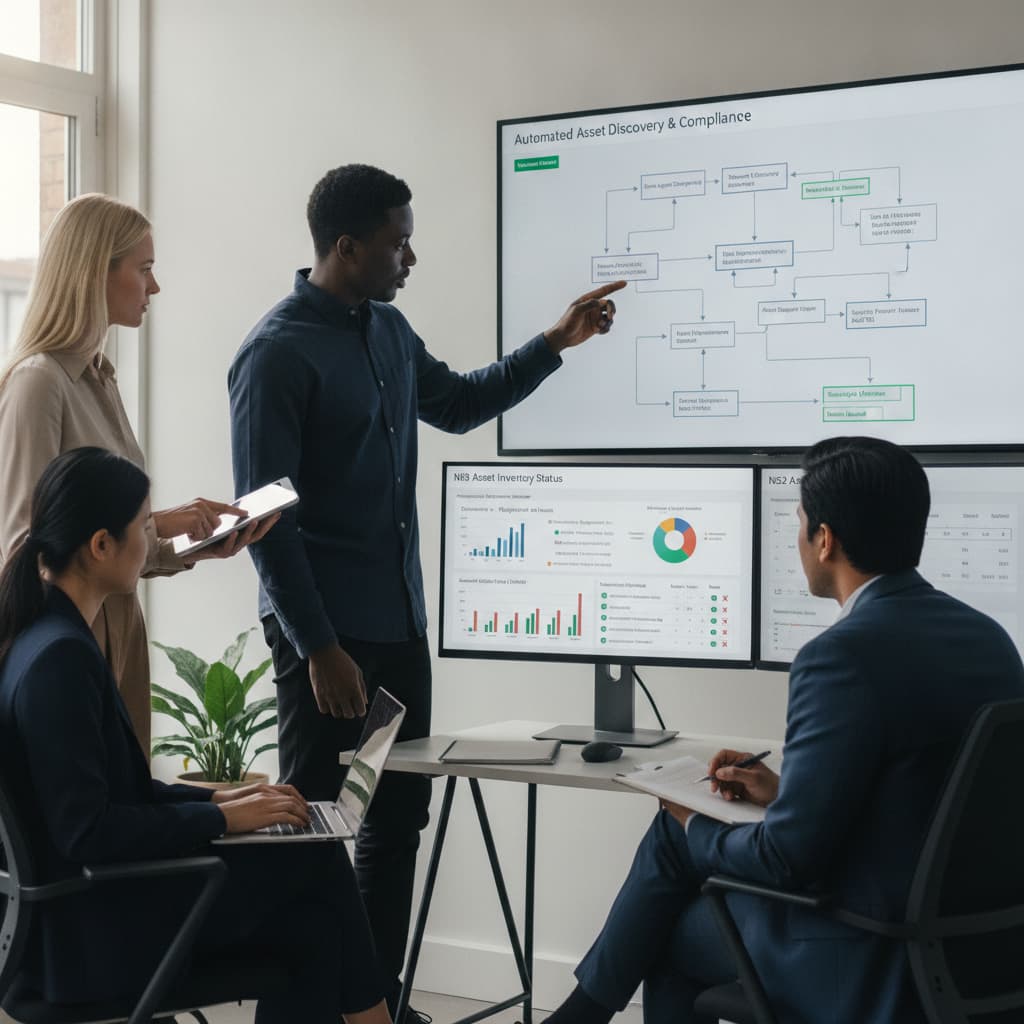
NIS2 automated discovery evidence: what scans prove that registers cannot
NIS2 automated discovery evidence helps organisations build a provable asset inventory with current data on systems, owners, locations, lifecycle status and risk.
Read more
Temps de lecture estimé : 11 minutes
\n \nIn today’s fast-paced work environment, where requirements change as quickly as social media trends, one project management method has emerged as the key to flexibility and efficiency: agile project management. But what makes this approach so essential in the modern business landscape? Let’s dive into the world of agility to unravel its secrets.
\n\nAgile project management is like building an airplane while flying it. Rather than following a rigid plan from start to finish, this approach prioritizes adaptability and human interaction. It was born from frustration with traditional management methodologies, where projects were often delivered late and failed to meet client expectations. Agile is the art of navigating uncertainty, adjusting course as new information becomes available, while keeping a clear objective in sight.
\n\n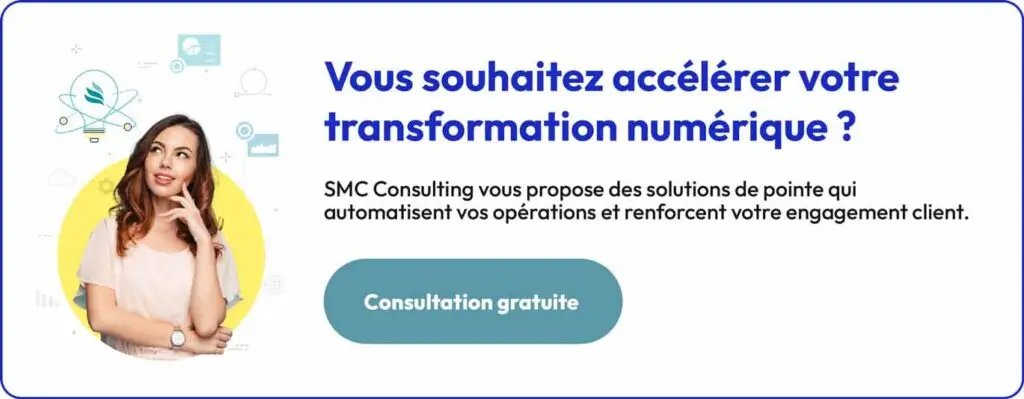
If agility were a recipe, its main ingredients would be open communication, adaptability, customer focus, and teamwork. These elements are built on the solid foundations of the Agile Manifesto, a pioneering document that revolutionized project management. Instead of focusing on heavy processes and rigid tools, the Manifesto emphasizes individuals and their interactions, and values rapid response to change for continuous value delivery. Here are the 12 guiding principles that encapsulate the essence of this philosophy:
\n\nThese principles form the beating heart of agile project management, propelling teams toward greater efficiency, adaptability, and satisfaction for both clients and developers. By adopting these principles, organizations embrace a framework that fosters innovation, accelerates quality product delivery, and proactively responds to changing market needs.
\n\nFlexibility is the superpower of the agile method. Imagine you’re driving on a winding road. With the agile method, you have the ability to turn the wheel quickly, avoiding obstacles while staying on course toward your destination. This adaptability allows teams to stay aligned with business objectives, even when the wind changes direction.
\n\nThe agile method transforms teamwork into a well-coordinated dance. By emphasizing communication and collaboration, it encourages team members to share ideas, solve problems together, and align on common goals. This synergy creates an environment where creativity and innovation can flourish.
\n\nAt the heart of the agile method lies an unwavering commitment to customer satisfaction. By involving clients in the development process and prioritizing regular feedback, the agile method ensures that the final product truly meets their needs and even exceeds their expectations. After all, a happy customer is the best brand ambassador.
\n\nWhile agility is gaining momentum, two methods stand out particularly in the pack: Scrum and Kanban. Each with its specificities, they offer different but complementary approaches to navigating the fluid world of agile project management.
\n\nScrum is like the Swiss Army knife of agility, designed for teams looking to improve their efficiency while navigating through complex projects. This method is structured, but flexible enough to adapt to various work environments.
\n\nIn the Scrum world, each team member has a well-defined role: the Product Owner, who holds the project vision; the Scrum Master, who ensures the team follows Scrum principles; and the development team, the beating heart of the operation, who transforms ideas into reality.
\n\nA sprint is a development time trial, typically two to four weeks, where the team strives to deliver value-added elements. A sprint includes planning, development, review, and retrospective, allowing continuous improvement of both the product and the team’s working methods.
\n\nIn the journey through the Scrum universe, tools like monday.com become crucial. monday.com facilitates task organization, sprint progress tracking, and strengthens team collaboration. In doing so, the Scrum process becomes not only more transparent but also more efficient. With its customizable boards and features adapted to any type of workflow, monday.com allows teams to stay on the same wavelength, optimize their productivity, and ensure continuous value delivery.
\n\nKanban, for its part, has its roots in Toyota’s production system. Its principle? Visualize the work to be done to optimize task flow. This method is ideal for teams looking to continuously improve their workflow without the constraints of fixed sprints.
\n\nKanban often manifests as a board, divided into columns representing different stages of the work process. Each task is symbolized by a card that moves across the board, offering a clear visualization of project progress at any time.
\n\nIn agile project management, Kanban allows for great flexibility and adaptability. It is particularly effective for managing real-time priorities and responding quickly to changes, while keeping the team focused on high-value tasks.
\n\nKanban excels in reducing task cycle time, thus improving productivity and efficiency. Additionally, by limiting work in progress, it helps avoid team burnout, fostering a more balanced and sustainable work environment.
\n\nAgile project management, known for its flexibility and efficiency, is far from being reserved for software development initiates only. In reality, this methodology extends to a wide range of sectors and projects, offering everyone the opportunity to improve their processes and results.
\n\nStartups and growing companies greatly benefit from agility, thanks to its ability to adapt quickly to market changes. It allows them to pivot smoothly and innovate continuously to stay competitive.
\n\nLarge companies and multinationals also find value in it, using Agile to break down silos, encourage collaboration, and accelerate decision-making, all aligned with the organization’s long-term visions and objectives.
\n\nSoftware development teams were the pioneers of Agile, but its principles have proven beneficial far beyond, touching areas like marketing, human resources, and product management.
\n\nProject management for product development is another sphere where Agile particularly shines. By emphasizing rapid feedback and the ability to adapt to changing user requirements, Agile enables creating products more aligned with real market needs, while reducing risk and optimizing resources.
\n\nProject management for construction and infrastructure is also beginning to adopt Agile principles, despite a traditionally more rigid environment. This adoption sees teams project, plan, and execute construction work more flexibly and collaboratively, thus reducing delays, cost overruns, and improving stakeholder satisfaction.
\n\nNon-governmental organizations (NGOs) and educational institutions are also exploring the benefits of Agile, seeking to improve communication efficiency and maximize project impact with often limited resources.
\n\nBy integrating project management for product development and for construction and infrastructure, it becomes clear that Agile has a reach far beyond its roots in software development. Regardless of your organization’s size or the nature of your projects, adopting Agile principles can transform your approach to work, foster better collaboration, and ultimately lead to greater customer and user satisfaction.
\n\nAn agile team is a dynamic mix of skills and talents, ranging from developers to project managers, designers, and testers. Each member, including the Product Owner and Scrum Master, plays a crucial role, contributing to the success of a project. Diversity of skills and a strong team spirit are essential.
\n\nCollaboration is the beating heart of an agile team. This involves constant exchanges, regular brainstorming sessions, and a culture of constructive feedback. The goal is to create an environment where innovation can flourish through communication and mutual support.
\n\nPrecise tracking of tasks and responsibilities is crucial. Here, monday.com software proves to be a valuable ally. This tool allows clear visualization of project progress, priority management, and ensures fair distribution of work. Thanks to its customizable boards, monday.com facilitates communication of objectives and real-time progress tracking, keeping the entire team aligned and focused.
\n\nSprint planning is a decisive step, defining the framework in which the team will operate for the coming weeks. Using monday.com for this task allows organizing sprints, setting clear objectives, and distributing tasks visually and interactively, ensuring everyone understands their mission.
\n\nAgility involves constant interaction with the client, an exchange that ensures the product evolves in accordance with their needs. With monday.com, sharing project progress, gathering feedback, and adjusting priorities becomes effortless, strengthening the partnership between the team and the client.
\n\nIterative feature delivery is at the heart of the agile approach. monday.com helps orchestrate these deliveries, allowing precise tracking of each feature from design to market launch, and facilitating feedback management for quick adjustments.
\n\nIn the constantly evolving business world, adopting a flexible and responsive approach is crucial for success and growth. This is where SMC Consulting comes in, offering unmatched expertise to integrate and maximize the benefits of the agile method within your organization.
\n\nAs a certified monday.com Work OS partner, SMC Consulting is at the forefront of providing project management solutions adapted to your business’s complexity and dynamics. Our offering goes well beyond simple software implementation; we are committed to transforming your way of working by facilitating communication, improving collaboration, and accelerating project delivery.
\n\nWith a range of personalized services, including board configuration, custom dashboard development, as well as automation creation and monday.com integration into your business ecosystem, SMC Consulting ensures a smooth transition to agile management. Our experts guide you at every step, from initial consultation to complete implementation, ensuring the solution is perfectly adapted to your specific needs.
\n\nBy choosing SMC Consulting, you also benefit from comprehensive training and dedicated support, thus ensuring an easy learning curve for your team and continuous support to quickly resolve any questions or issues. Our goal is to equip you with the tools and knowledge necessary to fully leverage monday.com, enabling your team to stay productive, engaged, and aligned with your business objectives.
\n\nWhether you’re looking to optimize your business processes, foster project success, or deliver exceptional customer experience, SMC Consulting is your trusted partner. Through our expertise in consulting, integration, and automation, backed by our certified monday.com partner status, we are perfectly equipped to help you tackle the challenges you face, transforming obstacles into opportunities for sustainable growth and success.
\n\nIn short, if you aspire to an agile transformation of your business, SMC Consulting is here to make this vision a reality, supporting you towards operational excellence and a significant competitive advantage in your sector.
\n \nFind out more about our PMO support for IT projects: scope, ownership and adoption.
Book a free consultation with an SMC Consulting expert.
Book Your Free ConsultationNIS2 automated discovery evidence helps organisations build a provable asset inventory with current data on systems, owners, locations, lifecycle status and risk.
Read more
Learn how the ServiceNow MCP server connects AI agents to governed ITSM workflows, Action Fabric and secure enterprise automation, plus readiness steps for 2026.
Read more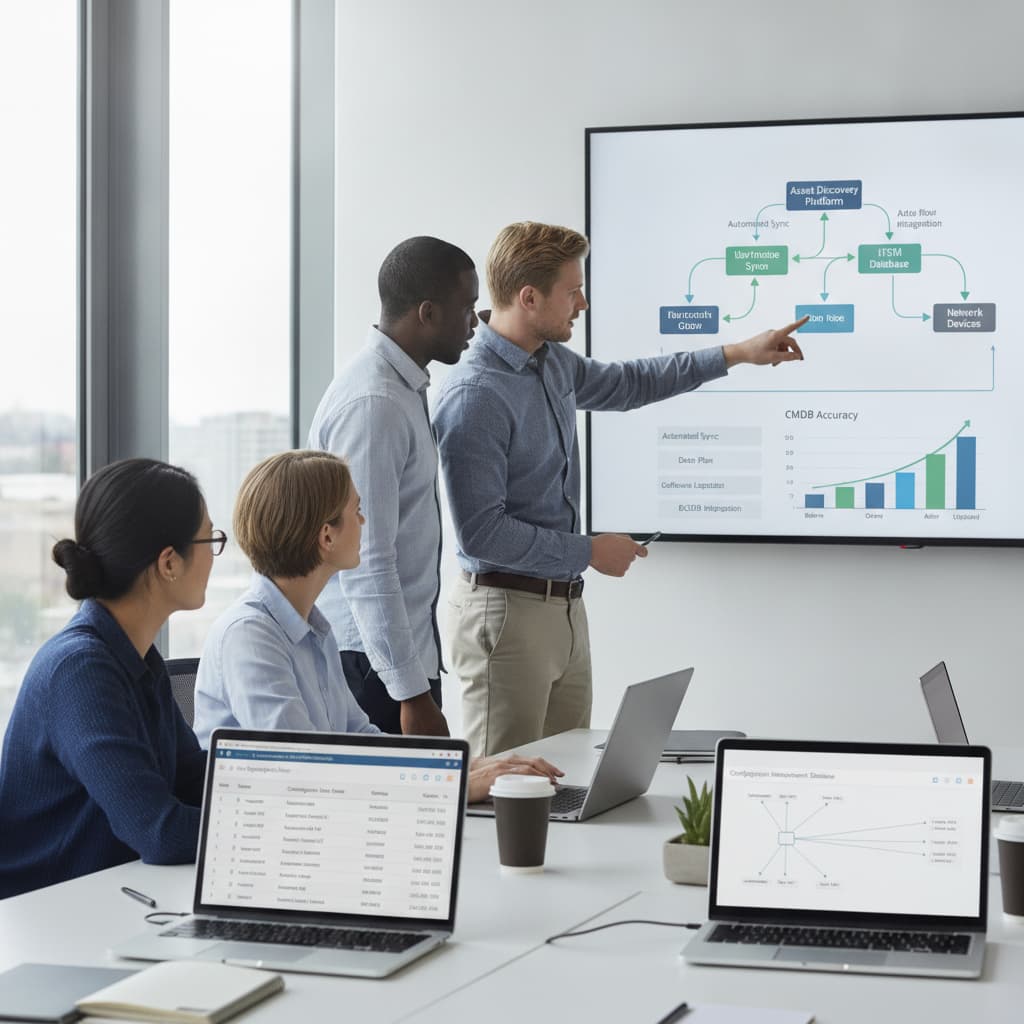
Learn how a HaloITSM Lansweeper integration connects discovery data to HaloITSM, enabling cleaner CMDB records, faster triage, and better change decisions.
Read more