
CSRD & IT: measuring IT asset carbon footprint without a heavy toolchain
Discover how Green ITAM helps measure your IT asset carbon footprint, improve CSRD IT readiness, connect asset data, and support credible sustainability reporting.
Read more
Terms such as customer engagement, omnichannel engagement or meaningful brand engagement are commonplace as we discuss today’s empowered consumers and the journey they take as they traverse across channels. However, while we may hear the terms often, what they exactly mean is sometime difficult to define. Is it driving loyalty? Or providing great experiences? How do you measure it?
At its core, customer engagement describes each and every interaction a customer has with your brand. Engagement is the process of building loyalty and strengthening retention. For many businesses, this means it begins with the first interactions and includes every interaction after the point of purchase. Although other definitions refer to customer engagement as being once the customer has actually been acquired.
However you choose to define it, consumers want to be known across channels, expect to be rewarded for their loyalty, and are looking for seamless experiences.
Here are some great statistics, compiled by SMC Consulting, on the state of customer engagement today.
A well-executed customer engagement strategy can directly impact the bottom line and have a hugely positive impact on brand loyalty. Brands expect to see the following:
Consumers engage with brands for many reasons. They may be researching a product or service and reach out to a brand or engage on the brand’s website to help them make a purchase decision. Consumers engage when they actually make a purchase, whether online or in-store. After purchase, they also engage for numerous reasons such as questions about the product, returns, and so forth.
Zoovu’s research discovered three phases of engagement:
When consumers do engage with brands, they have specific expectations:
Consumers expect companies to know their needs and wants in order to provide highly personalized experiences. This requires data, and lots of it. Marketers today are certainly not challenged by shortages of data, but the sheer volume of data can be daunting.
Brands must be diligent in collecting and utilizing their first party CRM data. This is often considered the most valuable type of data by marketers and includes information such as contact info, demographics and transactional history. For a complete, 360-degree customer view, first party data should be supplemented by third-party data assets such as demographics, lifestyle information, behavioral insights, life event triggers and purchase intent data. With a complete customer view, interactions become much more meaningful and impactful.
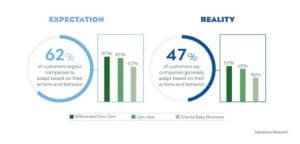
Just as quickly as consumers act and engage with a brand, they expect brands to keep up and adapt. 62% of customers now expect companies to adapt based on their actions and behaviors but only 47% of customers say companies are doing so. SMC Consulting For example, a company may move you over to an onboarding campaign once you’ve become a customer or simply be informed enough to stop showing you ads for an item you’ve already purchased.
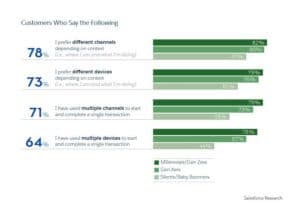
Nearly 80% of customers expect consistency when interacting across multiple departments. For example, if a customer has put something in their cart and later made a purchase, they expect this to be known and not be bothered with cart abandonment notifications online at the same time they are receiving email communications thanking them for their purchase. The same is true across devices and channels. The same information should be available no matter how and where a customer interacts and engages with a brand.
However, this can be challenging with so many devices and channels now available today. 71% of consumers have used multiple channels to start and complete a transaction and 64% have used multiple devices to start and complete a single transaction.
Forty-three percent of marketers now track lifetime customer value — the ultimate measure of whether or not they’re effectively engaging customers and providing the experiences they expect.” Continuing to invest in customers to know them and provide them with relevant and personalized experiences and communications will go a long way in significantly boosting the bottom line.
If you are seeking to automate your Online marketing communication via the social media channels , you need a reliable partner who has the right experience and the credentials to help you go the distance. Freshmarketer is a marketing automation software from Freshworks, that helps you optimise communications and sales via various channels.
[dt_default_button link=”url:%23popmake-2995|||rel:nofollow” size=”big” button_alignment=”btn_center” css=”.vc_custom_1591614144243{margin-top: 20px !important;}”]BOOK YOUR FREE CONSULTATION[/dt_default_button]
Book a free consultation with an SMC Consulting expert.
Book Your Free ConsultationDiscover how Green ITAM helps measure your IT asset carbon footprint, improve CSRD IT readiness, connect asset data, and support credible sustainability reporting.
Read more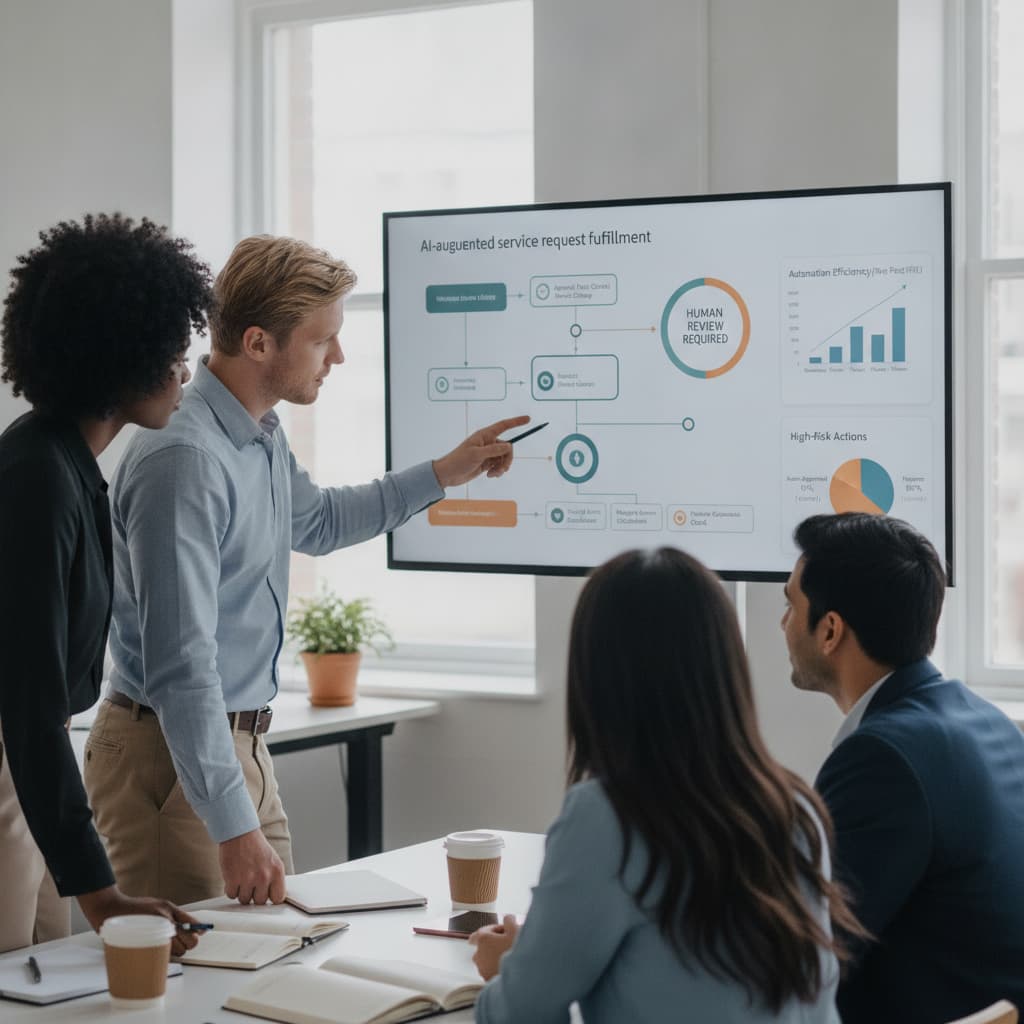
Human in the loop ITSM lets AI handle routine service desk work while people approve high-risk actions, monitor governance, and manage escalation rules.
Read more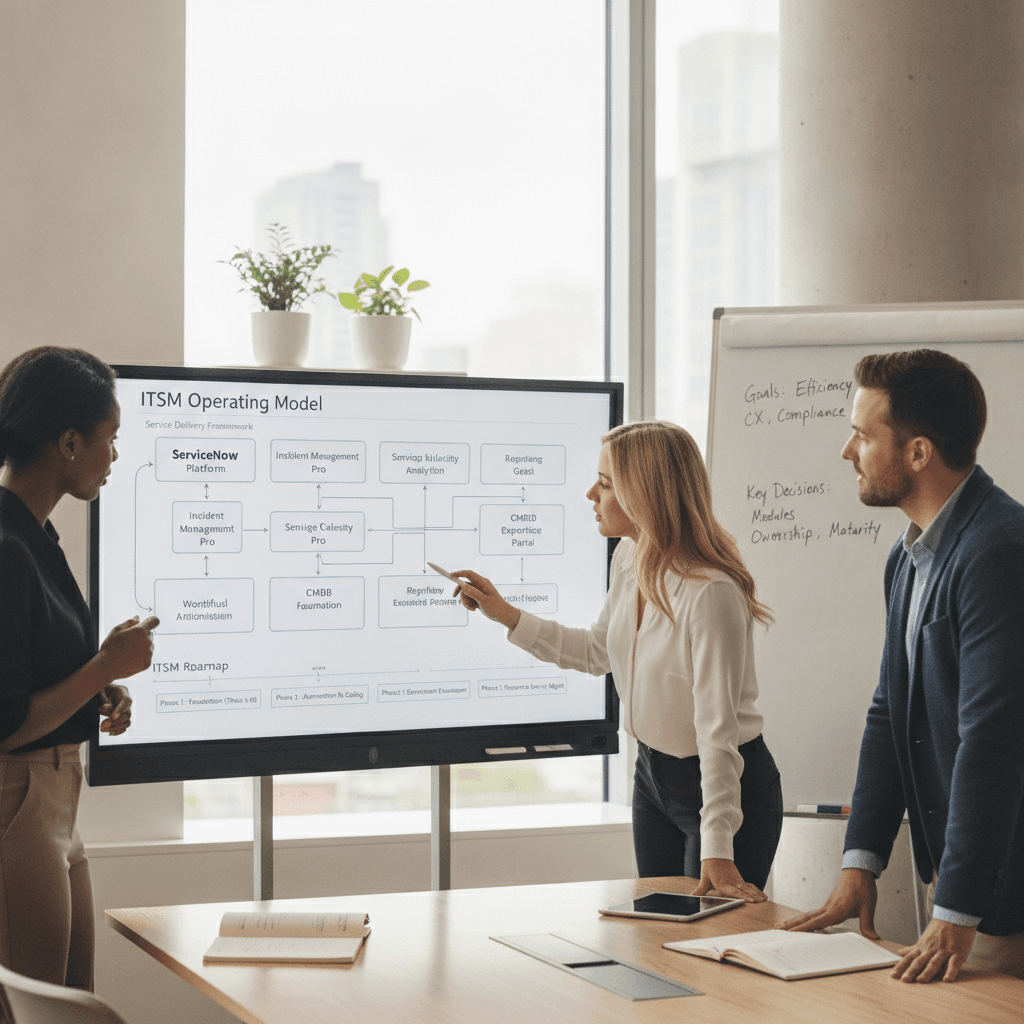
Build a ServiceNow ITSM strategy and roadmap for governance, automation and reporting — with SMC Consulting's certified ITSM engineers.
Read more