
Estimated reading time: 12 minutes
Key takeaways
- Your IT asset carbon footprint is now part of ESG, procurement, compliance, cost control, and board-level sustainability discussions.
- Reliable IT asset data is essential for credible CSRD IT readiness, Green ITAM, carbon accounting IT, and sustainability reporting IT assets.
- IT emissions include both embodied carbon from manufacturing and disposal, and operational carbon from energy use.
- Scope 3 IT equipment is often difficult to measure because data sits across suppliers, procurement, logistics, repair, cloud, recycling, and disposal partners.
- Green ITAM helps reduce emissions and costs by improving visibility, extending useful asset life, increasing reuse, reducing unnecessary purchases, and strengthening disposal governance.
Not sure your IT asset data can support CSRD reporting? Contact SMC Consulting for a practical ITAM and carbon-readiness assessment.
Your IT asset carbon footprint is becoming a board-level issue as organisations face pressure to measure, report, and reduce the environmental impact of their technology estate. Today, IT assets are not just operational tools. They are part of ESG reporting, procurement decisions, cost control, compliance readiness, and carbon reduction plans.
However, many organisations still rely on fragmented IT asset data spread across ITAM tools, CMDBs, procurement systems, finance records, service management platforms, and spreadsheets. As a result, sustainability teams often struggle to trust the numbers.
You cannot manage your IT asset carbon footprint without accurate IT asset data.
Therefore, IT Asset Management practices are now a critical enabler of CSRD IT readiness, Green ITAM, carbon accounting IT, and credible sustainability reporting IT assets programmes. This guide explains what to measure, what data you need, and how to reduce IT emissions in a practical way.
What is an IT asset carbon footprint?
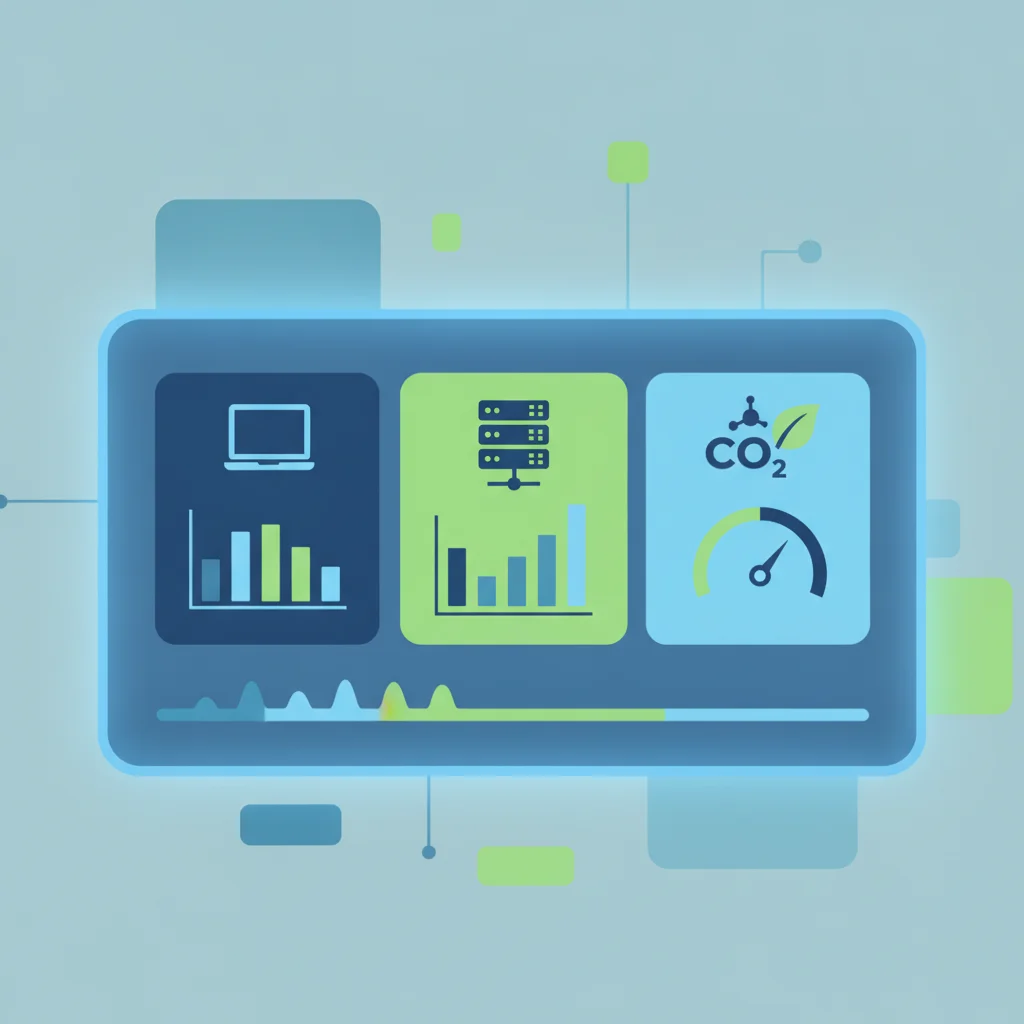
An IT asset carbon footprint is the total greenhouse gas emissions linked to IT assets across their full lifecycle. It includes emissions from raw material extraction, manufacturing, procurement, transport, use, maintenance, redeployment, resale, recycling, and disposal.
Importantly, this footprint includes more than devices currently in use. It is shaped by how many assets your organisation owns, which models you buy, how often you refresh them, how long assets sit in stockrooms, and whether retired equipment is reused, resold, recycled, or sent to landfill.
A complete view should include:
- Laptops, desktops, monitors, and mobile phones.
- Servers, storage, and networking equipment.
- Printers, peripherals, and meeting room technology.
- Data centre infrastructure.
- Cloud-related physical infrastructure operated by providers.
There are two main carbon types to understand. First, embodied carbon covers emissions created before and after use, such as manufacturing, transport, repair parts, and end-of-life treatment. Next, operational carbon covers electricity used while the asset is running. For data centres, this may also include cooling and facility energy.
However, IT carbon is not only an energy-efficiency issue. For some hardware, embodied emissions can be as important as operational emissions. Consequently, a three-year refresh cycle can create a very different annualised footprint than a five-year lifecycle. This is why carbon accounting IT must look at the whole asset lifecycle, not only power use.
Why IT assets matter in sustainability reporting
For organisations improving sustainability reporting IT assets are a critical data source because they connect procurement, energy use, lifecycle status, and disposal evidence. In practice, IT assets help ESG, finance, procurement, compliance, and audit teams understand where technology-related emissions come from.
Technology estates are becoming more visible because digital operations depend on large volumes of hardware and services. Additionally, IT supports almost every business process, so emissions can sit across departments, locations, suppliers, and service lines.
IT asset records can support:
- ESG disclosures.
- Scope 2 energy reporting for on-premise IT.
- Scope 3 reporting for purchased hardware and supplier activity.
- E-waste and circular economy reporting.
- Internal carbon reduction targets.
- Supplier and procurement reporting.
Nevertheless, common reporting challenges are serious. Many organisations lack one accurate inventory. Asset data may be split between ITAM systems, discovery tools, CMDBs, procurement platforms, vendor portals, finance systems, and spreadsheets. Moreover, records may miss serial numbers, model names, purchase dates, lifecycle status, or disposal certificates.
This creates reporting risk. Organisations may underreport material IT emissions, overestimate using broad assumptions, or make sustainability claims they cannot evidence. Under CSRD-style assurance expectations, weak data lineage can delay reporting and reduce confidence. Therefore, reliable IT asset data is the foundation for credible IT asset carbon footprint reporting.
CSRD IT implications: why audit-ready technology data matters
The Corporate Sustainability Reporting Directive is an EU sustainability reporting framework that expands the number of organisations required to disclose environmental, social, and governance information. In simple terms, it increases expectations for data quality, transparency, traceability, governance, external assurance, and evidence behind sustainability claims.
CSRD IT describes the practical impact of CSRD on IT departments. It means IT teams may need to provide reliable data on technology-related emissions, procurement, asset lifecycles, e-waste, suppliers, and cloud or managed service impacts.
For IT teams, this may include evidence for:
- Hardware procurement and refresh cycles.
- Energy use from on-premise infrastructure.
- Asset reuse and redeployment.
- Certified disposal and recycling.
- Supplier and value-chain impacts.
- Cloud infrastructure and managed services where relevant.
Although CSRD is not an ITSM framework, strong service management discipline helps. For example, ITIL best practices emphasise structured service governance, which can support consistent ownership, controls, and repeatable lifecycle processes.
Moreover, audit-ready ITAM helps sustainability teams trace ESG numbers back to source data. Unique asset IDs, manufacturer details, model names, locations, owners, purchase dates, suppliers, lifecycle statuses, and disposal records can all support carbon accounting IT.
Even organisations not directly in scope may be affected. Large customers, investors, and partners may request technology emissions data through procurement due diligence. Consequently, CSRD IT readiness is becoming a supply-chain expectation, not only a regulatory checkbox.
Scope 3 IT equipment: where the hidden emissions sit
Scope 3 emissions are indirect greenhouse gas emissions that occur in an organisation’s value chain. They sit outside direct operations and purchased electricity. For IT, many emissions fall into Scope 3 because they are created by suppliers, manufacturers, logistics partners, repair providers, recyclers, cloud providers, and other third parties.
Scope 3 IT equipment includes upstream and downstream emissions linked to the hardware an organisation buys, uses, services, and disposes of. Examples include manufacturing emissions from laptops, desktops, monitors, servers, storage arrays, routers, switches, printers, phones, and peripherals.
Additionally, Scope 3 can include emissions from raw material extraction, component manufacturing, supplier logistics, warehousing, outsourced repair, managed IT services, refurbishment, recycling, reverse logistics, and disposal. Depending on reporting boundaries, cloud-related hardware may also sit in the value chain.
However, Scope 3 is hard to measure. Supplier data may be unavailable, inconsistent, or not specific to the product model. Procurement records may not connect cleanly to asset records. Disposal evidence may also be incomplete.
This is where ITAM helps. ITAM provides the core facts: what assets exist, who owns them, where they are, when they were purchased, which supplier provided them, and what lifecycle stage they are in. Therefore, ESG and finance teams can map scope 3 IT equipment to emissions factors, supplier lifecycle data, or approved assumptions.
Carbon accounting IT: what data do you need?
Carbon accounting IT is the process of collecting, estimating, calculating, documenting, and reporting greenhouse gas emissions related to IT assets and services using consistent methods and emissions factors.
Good carbon accounting depends on complete inventory data, reliable procurement records, supplier emissions data, energy assumptions, disposal evidence, repeatable calculations, and clear governance. In addition, teams need agreement between IT, procurement, finance, ESG, risk, and suppliers.
Key ITAM fields include:
- Asset type, such as laptop, server, switch, phone, printer, or monitor.
- Manufacturer, model, SKU, and product family.
- Serial number or unique asset ID.
- Quantity by category, location, and business unit.
- Purchase date, supplier, contract, and purchase channel.
- Location, including office, country, data centre, or remote worker site.
- Assigned user, team, or department.
- Warranty, support status, and planned refresh date.
- Lifecycle status, such as in use, in stock, repaired, redeployed, retired, resold, recycled, or disposed.
- Energy use estimate, duty cycle, operating hours, and PUE where relevant.
- Disposal date, method, provider, certificate, and outcome.
- Supplier emissions factor or lifecycle assessment data.
Where actual data is not available, estimates are normal. For example, organisations may use average power draw, assumed hours of use, generic emissions factors, or category-level lifecycle data. However, assumptions must be documented and improved over time.
Modern platforms can help structure the process. For example, ServiceNow is often used to manage IT workflows and asset data, while Atlassian ITSM can support service and operational processes that connect teams and records.
How Green ITAM helps reduce IT emissions
Green ITAM is the use of IT Asset Management practices to reduce environmental impact while improving cost control, governance, compliance, and lifecycle decision-making.
Traditional ITAM focuses on asset visibility, cost control, licence and hardware governance, compliance, and lifecycle management. Green ITAM adds carbon visibility, sustainability data quality, embodied carbon awareness, energy-use considerations, circular economy practices, e-waste governance, and ESG reporting support.
However, Green ITAM is not only buying “greener” devices. It is not only recycling old laptops. It is also not a one-off reporting exercise. Instead, it embeds sustainability into the same governance that already controls procurement, deployment, support, refresh, reuse, and disposal.
Green ITAM helps organisations:
- Improve asset visibility and data quality.
- Reduce unnecessary purchases.
- Extend asset life where security and performance allow.
- Increase reuse and redeployment.
- Optimise refresh cycles.
- Improve repair and refurbishment.
- Strengthen disposal and recycling governance.
- Support sustainability reporting IT assets requirements.
- Provide better evidence for IT asset carbon footprint calculations.
Lifecycle extension matters because frequent replacement creates new embodied emissions more often. Therefore, extending useful life can reduce annualised embodied carbon, provided it does not create unacceptable security, support, productivity, or energy risks. In short, Green ITAM turns lifecycle decisions into carbon, cost, and risk decisions.
8 practical steps to measure your IT asset carbon footprint
To measure your IT asset carbon footprint, start with a controlled process rather than a perfect model.
- Build or validate your IT asset inventory. Consolidate data from ITAM tools, CMDBs, discovery platforms, procurement systems, finance systems, and spreadsheets.
- Remove duplicates and correct core records. Confirm asset IDs, serial numbers, users, locations, departments, and statuses.
- Categorise assets by type. Group laptops, desktops, monitors, phones, servers, storage, networking equipment, printers, peripherals, and data centre devices.
- Assign lifecycle stages. Use statuses such as in use, in stock, under repair, redeployed, retired, resold, recycled, or disposed.
- Gather procurement and supplier data. Link assets to purchase orders, contracts, suppliers, manufacturers, models, quantities, and dates.
- Map assets to emissions factors. Prefer supplier-specific lifecycle data where available. Otherwise, use approved benchmarks and document assumptions.
- Estimate embodied and operational carbon. Embodied carbon is usually calculated as devices multiplied by per-unit embodied emissions, sometimes annualised over useful life. Operational carbon uses power draw, usage hours, and electricity emissions factors.
- Include end-of-life data and review regularly. Integrate results into ESG reporting, update emissions factors, improve supplier information, and make Green ITAM part of ongoing governance.
For cloud or hybrid infrastructure, Microsoft Azure documentation can also help teams understand infrastructure, service boundaries, and operational data sources.
How better ITAM reduces emissions and costs
Carbon reduction and cost optimisation often align. When organisations buy fewer unnecessary assets, they reduce embodied emissions and capital expenditure at the same time. Therefore, better ITAM can support both sustainability and financial goals.
Practical opportunities include reducing over-procurement through accurate demand forecasting. Many organisations buy new equipment while usable devices sit in stockrooms. Additionally, reclaiming dormant laptops, monitors, phones, and peripherals allows teams to redeploy assets before purchasing more.
Lifecycle extension can also reduce emissions and costs. However, it should be risk-based rather than automatic. IT teams must balance carbon, cost, performance, warranty, security, user experience, supportability, and operational resilience.
Other actions include:
- Standardising hardware models to simplify support and improve carbon calculations.
- Rationalising printers and peripherals to reduce energy, consumables, and waste.
- Repairing and refurbishing assets where commercially viable.
- Increasing resale and redeployment to recover value.
- Improving stock control to avoid emergency purchases.
- Using refresh planning to forecast cost and carbon together.
Analyst perspectives from Gartner IT and Forrester Research often reinforce the same leadership theme: technology decisions are now business, risk, cost, and sustainability decisions. Consequently, ITAM best practices and automation are no longer only operational disciplines. They are strategic levers for CIOs, procurement leaders, finance teams, and ESG owners.
Common challenges when measuring IT asset emissions
Most organisations face practical barriers when they first measure IT asset emissions. These challenges are normal, and they do not mean the programme should stop. Instead, the goal is to build a transparent baseline that improves over time.
Common challenges include fragmented asset data across ITAM, CMDB, discovery, procurement, finance, spreadsheets, and vendor portals. In addition, inventories are often incomplete because of shadow IT, unmanaged peripherals, remote work, and uncontrolled stockrooms.
Lifecycle records can also be weak. Purchase dates, warranty status, refresh dates, retirement records, disposal certificates, and recycling outcomes may be missing. Meanwhile, ownership is often unclear because IT, procurement, finance, sustainability, and risk teams each own part of the process but not the whole outcome.
Supplier carbon data adds another challenge. Vendors may not provide product-level lifecycle assessments, or they may use different methods. As a result, organisations may struggle to compare devices or calculate scope 3 IT equipment consistently.
Tooling can also limit progress. Existing ITSM or ITAM platforms may not include fields for emissions factors, lifecycle assumptions, carbon calculations, or ESG reporting integrations. Nevertheless, the problem is usually solvable through better data models, governance, integrations, and process design.
ISO/IEC 20000 highlights the value of structured service management systems. Similarly, carbon reporting benefits from repeatable controls, documented methods, and clear accountability.
What to look for in an ITAM and sustainability partner
External support can help when organisations lack the data quality, methodology, tooling, or internal capacity to connect ITAM with sustainability reporting. However, the right partner should be practical, vendor-neutral, and able to bridge IT, ESG, procurement, and finance.
Look for a partner with strong ITAM and ITSM expertise. They should understand inventories, CMDBs, discovery, lifecycle processes, governance, service workflows, and operational controls. Additionally, they should understand how IT data supports ESG reporting, carbon accounting IT, CSRD readiness, and audit requirements.
A strong partner should help with:
- Asset data cleansing, reconciliation, and validation.
- Lifecycle governance for procurement, deployment, reuse, refresh, and disposal.
- ITAM, CMDB, ITSM, procurement, finance, and ESG reporting integrations.
- Emissions factor mapping and calculation logic.
- Supplier data requests and lifecycle data limitations.
- Scope 3 IT equipment reporting challenges.
- Reporting templates, dashboards, and evidence trails.
- Governance models for ongoing improvement.
Commercial pragmatism is also important. A good partner will not push sustainability at the expense of security, user experience, compliance, or resilience. Instead, they will help leaders make balanced decisions. For example, lifecycle extension should be encouraged where it is safe and valuable, but not where old equipment creates unacceptable operational risk.
Ultimately, a Green ITAM partner should help you build a repeatable capability, not just produce a one-time report.
How SMC Consulting can help
SMC Consulting helps organisations connect ITAM maturity, ITSM governance, sustainability reporting, and practical carbon reduction. The aim is not simply to create a carbon report. Instead, the goal is to enable better decisions across the IT asset lifecycle.
SMC Consulting can support your organisation with ITAM maturity assessment. This includes reviewing inventory completeness, data quality, ownership, lifecycle processes, tooling, governance, and reporting readiness.
Additionally, SMC Consulting can help improve IT asset data quality by cleansing, reconciling, and validating records across ITAM, CMDB, procurement, finance, discovery tools, and spreadsheets. This creates a stronger foundation for sustainability reporting IT assets and CSRD IT evidence.
Green ITAM process design is another key area. SMC Consulting can help define processes for procurement control, onboarding, deployment, reuse, redeployment, lifecycle extension, refresh planning, disposal, and reporting.
For IT asset carbon footprint measurement readiness, SMC Consulting can help identify required data, define gaps, prioritise remediation, and shape the operating model. Furthermore, carbon accounting IT support can include emissions factor mapping, calculation approaches, assumptions, documentation, and reporting structures.
SMC Consulting can also support scope 3 IT equipment data collection by helping teams connect supplier data, procurement records, lifecycle evidence, and disposal certificates. As a result, IT leaders can improve reporting confidence while also reducing waste and unnecessary cost.
Conclusion: make ITAM the foundation of IT carbon reporting
Your IT asset carbon footprint is now a business, compliance, operational, and sustainability issue. However, credible reporting is not possible without reliable IT asset data. Green ITAM connects visibility, lifecycle management, procurement, cost control, and carbon reduction.
Although scope 3 IT equipment can be difficult to measure, it becomes more manageable when asset, supplier, procurement, and lifecycle data are connected. Meanwhile, CSRD IT expectations increase the need for traceable, audit-ready technology data. Effective carbon accounting IT requires collaboration across IT, procurement, finance, sustainability, suppliers, and service providers.
Is your IT asset data good enough to support credible reporting? Speak to SMC Consulting about assessing your ITAM maturity and building a practical foundation for IT asset carbon reporting.
About the author
Frequently asked questions
What is an IT asset carbon footprint?
An IT asset carbon footprint is the total greenhouse gas emissions created by IT assets across their lifecycle, including manufacturing, transport, use, maintenance, reuse, recycling, and disposal.
How does Green ITAM reduce emissions?
Green ITAM reduces emissions by improving asset visibility, preventing unnecessary purchases, extending device lifecycles, increasing reuse and redeployment, and improving recycling and disposal governance.
What does CSRD mean for IT teams?
CSRD IT requirements mean IT teams may need to provide traceable, audit-ready data on technology emissions, IT procurement, asset lifecycle management, supplier impacts, and e-waste processes.
What is scope 3 IT equipment?
Scope 3 IT equipment includes indirect value-chain emissions from IT hardware, such as manufacturing, supplier logistics, outsourced repair, cloud infrastructure, recycling, and disposal.
What data is needed for carbon accounting IT?
Carbon accounting IT requires asset type, model, manufacturer, quantity, purchase date, location, lifecycle status, energy consumption estimates, refresh cycles, disposal records, and supplier emissions factors.
How do IT assets support sustainability reporting?
For sustainability reporting IT assets provide the data needed to evidence hardware procurement, energy use, lifecycle decisions, reuse, recycling, disposal, and supplier-related emissions.