







From process design to configuration: how certified engineers translate ITIL 4 into ServiceNow workflows
Learn how ITIL 4 to ServiceNow workflows turn best‑practice guidance…


















Clear request paths, fewer back-and-forths and a user experience that encourages self-service.

Routing, priority rules, SLA tracking and escalation workflows
that run without
manual intervention.

Approval workflows,
risk assessment steps and audit-ready tracking.

Repeat issues reduced through structured
root-cause analysis
and linked knowledge content.

Service performance, SLA trends, workload insights and continuous improvement tracking.


Requests, incidents, changes, SLAs, reporting,
and governance

Triage, categories, QA, knowledge integration,
and self-service portals

Approvals, employee onboarding, internal
requests, and cross-team handoffs

Handoffs between marketing, sales, and customer success where friction creates revenue leaks

Structured content that powers self-service,
reduces ticket volume, and enables AI safely





Learn how ITIL 4 to ServiceNow workflows turn best‑practice guidance…

An AI governance service desk helps Benelux IT teams use…

Learn how ServiceNow multi-country ITSM lets you run one regional…
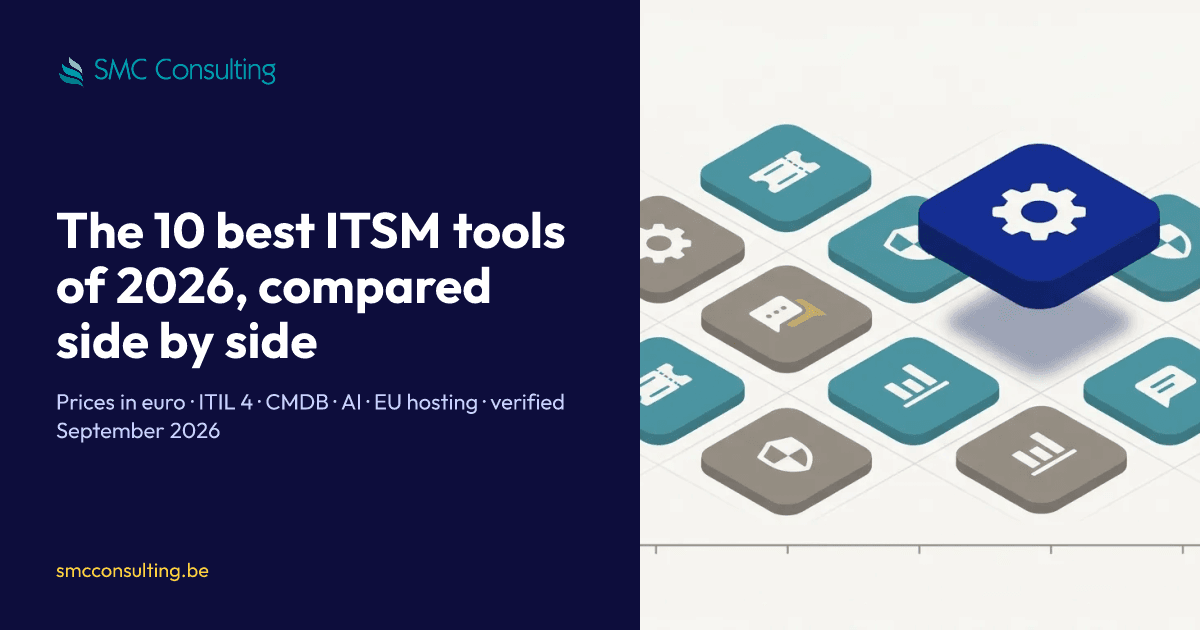
Euro prices for 100 agents, ITIL 4 coverage, CMDB, AI and EU hosting on 60 criteria, with a fit finder you control.
Read more →
SMC Consulting joins the Lansweeper partner ecosystem to connect asset discovery with HaloITSM, ServiceNow and Freshservice for a complete, current CMDB.
Read more →
Discover how Green ITAM helps measure your IT asset carbon footprint, improve CSRD IT readiness, connect asset data, and support credible sustainability reporting.
Read more →